CLAUDE.md Is Not Optional
Skipping CLAUDE.md is like hiring a developer and never telling them about the project. Stop doing it.
Here's a hot take: if you're using Claude Code without a CLAUDE.md file, you're not really using Claude Code. You're using a fancy autocomplete with a terminal UI.
What CLAUDE.md Actually Does
Think of it as the onboarding doc for your AI pair programmer. It tells Claude Code:
- What stack you're using (so it stops suggesting Express when you use Hono)
- Your coding conventions (tabs vs spaces, naming patterns, file structure)
- How you want responses formatted (direct, no fluff, code-first)
- What to read at session start and what to write at session end
Without this file, Claude Code starts every single session from zero. No memory. No preferences. No context. Every. Single. Time.
The Five Layers
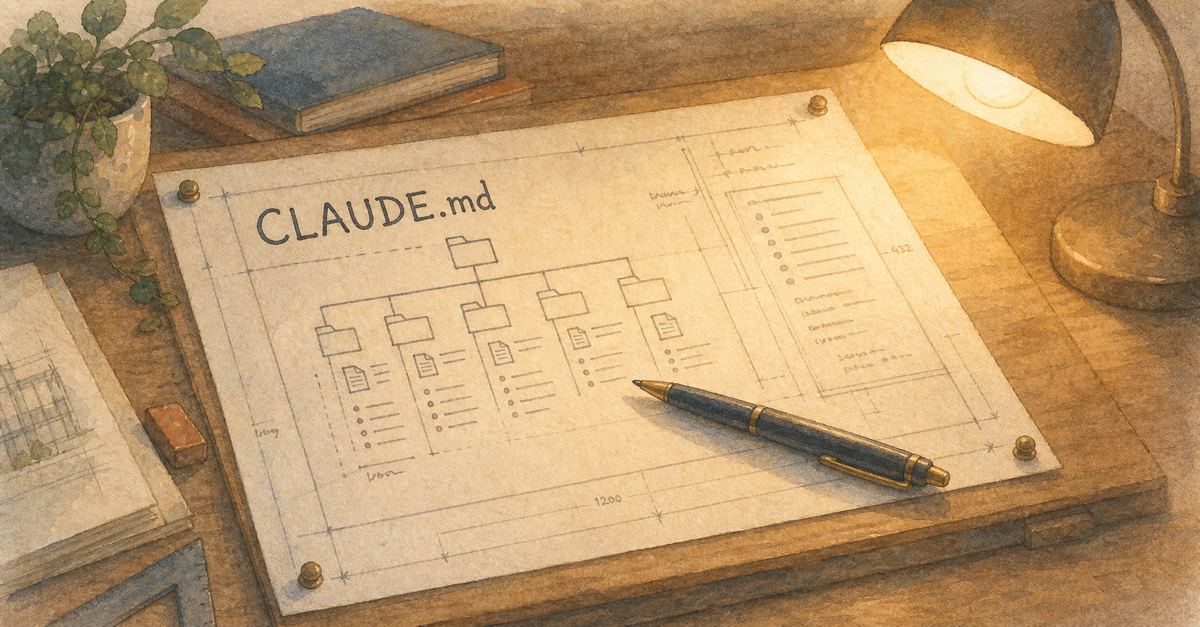
CLAUDE.md isn't just one file. It's a five-layer architecture:
- Enterprise : org-wide rules everyone follows
- Project root : your repo's CLAUDE.md
- Feature-scoped : nested CLAUDE.md in subdirectories
- User-level : your personal ~/.claude/CLAUDE.md
- Session-level : memory and handoffs that persist
The One-Minute Version
If you do nothing else today, run claude /init in your project. It auto-generates a starter CLAUDE.md by scanning your codebase. Then spend 60 seconds adding your preferences.
That single file is the difference between "Claude Code is meh" and "Claude Code is my operating system."
Not optional. Foundational.
If you are a UX or UI designer, we have a guide series built specifically for your work: decoding briefs, running heuristic evaluations, synthesizing research, and handing off to code. No terminal required for most of it.
Browse the designer guidesRelated Posts
You Don't Need settings.json Hacks to Fix Claude Code
A viral tweet says 4 environment variables fix 'nerfed' Claude Code. Here's what actually fixes it: governance, not flags.
Why Most People Use Claude Code Wrong
You installed Claude Code, typed a prompt, got a mid answer, and walked away. Here's what you missed.
The Cold Start Problem and How to Fix It
Every Claude Code session starts from zero unless you set up the session lifecycle. Here's the 3-step fix.
New guides, when they ship
One email, roughly weekly. CLAUDE.md templates, workflows I actually use, and the cut-for-length stuff that does not make the public guides. One-click unsubscribe.
Or follow on Substack