Stating a Rule Twice Does Not Make Claude Follow It
I counted rule violations across 745 of my own Claude Code sessions. Repetition changed nothing. Conflict between rules explained almost everything. Here is the script so you can count your own.
 Shadman RahmanPrincipal PM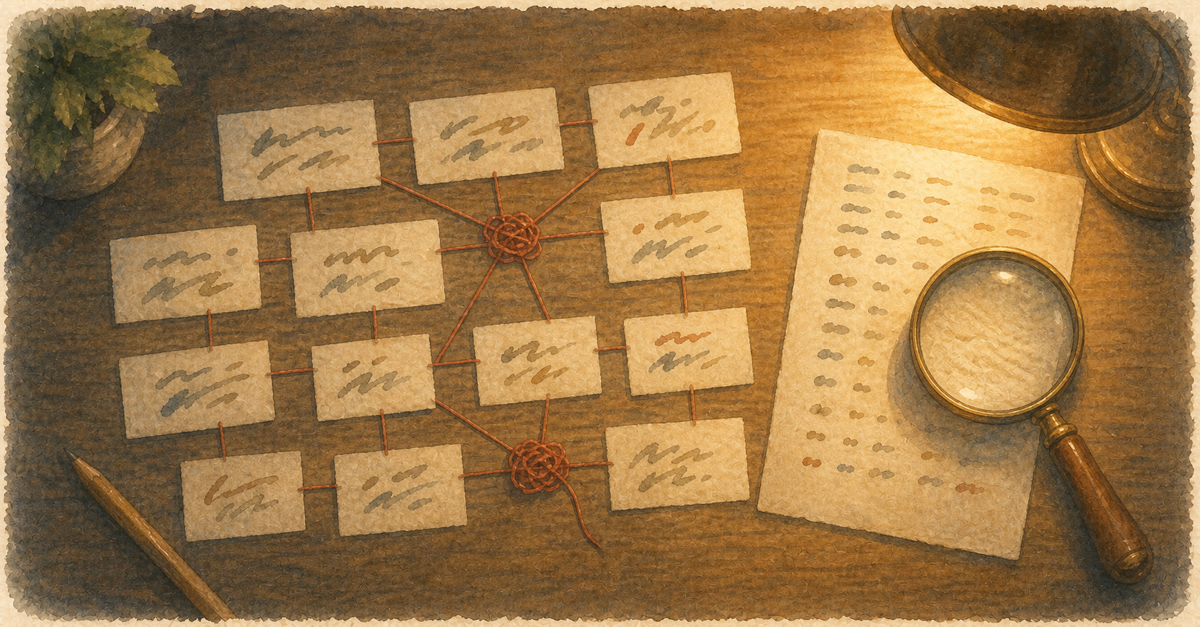
When a rule in your CLAUDE.md keeps getting ignored, the reflex is to say it again. Put it in bold. Add it to a second file. Write "CRITICAL" in front of it.
I did all three, for months. Then I counted, and repetition turned out to have no measurable effect at all. What did predict whether a rule got followed was whether another rule contradicted it.
Here is the counting, and the script so you can run it against your own sessions.
If you are new here, this is what a rule file is
CLAUDE.md is a plain text file Claude Code reads at the start of every session. You write your project conventions and preferences in it. There is a project one in your repo and a personal one at ~/.claude/CLAUDE.md, and both get loaded automatically every time. The CLAUDE.md guide covers the full five-layer setup.
Mine had grown to twelve files and 927 lines. If yours is thirty lines, most of this post is a warning about a problem you do not have yet, and you can skip to the last section.
The method, so you can repeat it
Claude Code already writes every session to disk as JSONL, one file per session, under ~/.claude/projects/. You almost certainly have hundreds sitting there right now. Nothing to export or install.
Pick a rule with a literal string test. Mine was "never use an em dash." Then count how often it was broken:
import glob, json, os

files = glob.glob(os.path.expanduser("~/.claude/projects/*/*.jsonl"))
hits = total = 0
BANNED = chr(0x2014)      # the character this rule forbids: an em dash

for f in files:
    with open(f, errors="ignore") as fh:
        for line in fh:
            try:
                d = json.loads(line)
            except Exception:
                continue
            m = d.get("message") or {}
            if m.get("role") != "assistant":
                continue
            c = m.get("content")
            txt = c if isinstance(c, str) else "".join(
                b.get("text", "") for b in c if isinstance(b, dict))
            if not txt.strip():
                continue
            total += 1
            if BANNED in txt:
                hits += 1

print(f"{hits} of {total} assistant replies ({hits/total:.1%})")
Swap BANNED for whatever string your rule forbids. That is the whole technique. Everything below came out of running variations of it over 745 sessions.
Repetition bought nothing
I picked nine rules I could count mechanically: banned words, banned openers, answer length, em dashes. For each one I counted how many times it was stated across my always-loaded files, and how often it was broken.
Five of the nine sat at exactly zero violations. Four of those five were stated once.
The rules I had repeated most were not the best-behaved ones. They were roughly average. (The correlation came out at +0.167 across nine rules, which is far too small a sample to publish as a result. I am not claiming a measured relationship. I am saying the strong effect I expected to find was not there, and nine rules was enough to see that much.)
Saying it twice mostly produced a second copy that drifted from the first.
Conflict was the variable
Twelve files, 21 cross-references between them, only 2 of which pointed both ways. Lined up against the violation counts, one pattern was clean enough that I stopped looking for others.
Every rule at zero violations had no conflicting sibling. Every badly-broken rule had one.
My clearest case had been sitting there for months. One rule said no sentence over 20 words. A separate hook flagged flat sentence rhythm below a variation floor. Obeying the first guarantees failing the second. I simulated it using the hook's own code against its own population: splitting every sentence at 20 words dropped median rhythm variation from 0.566 to 0.312, and put 98.9% of replies under the floor the hook enforces.
One rule was manufacturing the exact defect the other rule existed to catch.
Moving a rule into an on-demand file kills it
Two days before all this I had done the sensible-sounding thing. Pulled a rule out of the always-loaded layer into a separate file, to be read when relevant.
That file had been read 0 times in 746 sessions.
Same story with skills. Two invocations against 264 writes to the file types they cover.
Extraction does not make a rule lighter. It moves it from weakly followed to never read. Either a rule is worth always-loading or it is worth deleting.
The part that generalises past Claude Code
Three places in my setup claimed a control that did not exist.
My notes said em dashes were hook-enforced, conversation included. The hook was PreToolUse on Write and Edit. It had never seen a chat reply in its life. Files on disk sat at 4 to 7%. Chat replies sat at 14.3%. The write hook worked perfectly, nothing watched the other surface, and my own config told me it was covered, so I never looked.
That hook is still running. It blocked the draft of this post three times before I worked out that the code sample above contains the exact character it bans, which is why the sample builds it with chr().
The one worth checking on your own setup: a verification hook was catching real problems and exiting 0. Its log held 30 findings. Exit 0 sends nothing back to the model, so all 30 were caught and none delivered. Blocking hooks need to exit 2. The hooks guide covers the exit codes.
Bloat costs tokens. A control you believe in that does not exist stops you looking.
What to actually do
If your rule stack is small, under about a hundred lines, you do not have a duplication problem yet. One thing still applies: check that any hook you rely on is wired to the surface you think it covers. That is a five-minute read of your settings.json, and it is where my worst findings were.
If your stack is large:
- State each rule once. Delete every duplicate, including the ones written in different words.
- Before adding a rule, look for the sibling it will fight.
- If a hook can check it, write the hook and delete the prose. Rules naming a literal string got near-perfect compliance. Rules describing an abstract pattern showed no measurable effect.
- No new rule in the same session as the failure that motivated it. One bad session is a sample of one.
Three rule files have ever been retired from my stack, the last on 16 June. That is the real problem with instruction stacks. Everyone has a test for adding a rule and nobody has one for removing it.
Caveats
One person's machine, one person's usage, which skews to long agentic sessions and writing rather than pure coding. Half those rule files were two days old when I measured them, so their numbers are thin. The nine-rule sample is too small for the correlation to mean anything on its own, which is why the section above leads with the counts instead.
What holds regardless is that the counting was cheap. The script above runs in seconds against sessions you already have. Before you trim your CLAUDE.md by feel, spend ten minutes finding out which rules are actually being broken. In my case the file was not too big. It was arguing with itself.
Related posts
966 Memory Files: What It Took to Keep Claude Code Reading the Right One
Anthropic's docs explain CLAUDE.md and auto memory well, and they stop at about the point where the folder gets big. This is what broke in mine after that point, with the numbers.
Why Context Beats Cleverness Every Time
Stop trying to write the perfect prompt. Start giving Claude Code the right context instead.
You Don't Need settings.json Hacks to Fix Claude Code
A viral tweet says 4 environment variables fix 'nerfed' Claude Code. Here's what actually fixes it: governance, not flags.
New guides, when they ship
One email, roughly weekly. CLAUDE.md templates, workflows I actually use, and the cut-for-length stuff that does not make the public guides. One-click unsubscribe.
Or read Product Field Notes, the Substack